Photo blog
Essays and visual stories about seeing the world through images. Slow photography. Thoughtful work.
Stay if this resonates.
Photography is not just about moments. It’s about attention, perception, and meaning.
A slow practice of seeing and understanding ourselves through images.
Discover the photographer within you
These essays explore how photography deepens our way of seeing.
True
Documentary photography is not just an art form but a powerful tool for revealing the truth about the world. It captures key historical moments, evokes empathy, and helps us understand reality. In an era of media manipulation, it stands out for its authenticity and the dedication of its creators. Thanks to documentary photographers, we gain insight into social issues and change. Magnum Photos and VII Photo Agency have long shaped this genre, documenting history and the present.
Black Mirror
Photography was once a thoughtful art, capturing raw truth and deep emotions, as seen in the works of Mary Ellen Mark, Diane Arbus, and Josef Koudelka. Today, instant digital photography has turned into self-focused imagery, often lacking depth and meaning. Instead of documenting reality, we create polished illusions for social media. To preserve truth for future generations, we must return to photography as a tool for storytelling and genuine expression.
What happens, stays gone
Time flows endlessly, never pausing or returning. Photography, though it seems to capture a moment, actually reminds us that time keeps moving forward—no scene repeats, and all moments are gone. Famous photographers like Michael Kenna, Ernst Haas, and Aleksey Titarenko have explored time in unique ways. Kenna’s timeless, long-exposure landscapes evoke stillness, while Haas's energetic, colorful shots show time as rhythm and movement. Titarenko's ghostly figures remind us of life’s fleeting nature.
Anatomy of Anatomy
Explore how the body serves as a medium in photography through the unique approaches of Nobuyoshi Araki, Spencer Tunick, and Ralph Gibson. Each artist redefines intimacy, sensuality, and abstraction, using the body to convey emotions and deeper meanings. Their works challenge traditional perceptions, turning the body into more than just an object, but a carrier of profound significance in the realm of visual art.
Intuition
Street photography can follow two paths: one of patience and planning, and another of spontaneity. Fan Ho captured dramatic scenes through thoughtful observation of light and shadow. In contrast, Helen Levitt photographed New York’s lively streets with spontaneity, catching unplanned, energetic moments. Regardless of approach, intuition is key in street photography, guiding photographers to be present, notice details, and capture meaningful images that connect deeply with the moment.
The Color Purple
Gordon Parks and Charles Moore used photography as a powerful tool to document the fight against racial segregation, injustice, and inequality in the U.S. Parks captured the daily struggles of African Americans, focusing on issues like poverty and the dual discrimination faced by women. Moore's work highlighted the most dramatic moments of the Civil Rights Movement, exposing violence against protesters. Both photographers played a crucial role in raising public awareness, using their cameras as weapons in the fight for justice and equal rights.
Dualism
Discover the fascinating dualism in art through the works of Ansel Adams and Henri Cartier-Bresson, two iconic photographers who masterfully use perfectionism and chance in their photography. Together, their contrasting approaches illustrate how diverse techniques can lead to extraordinary pieces of art. This exploration invites you to reflect on your creative journey and find your own path within this harmony of control and spontaneity.
Innocence of Vision
Discover the power of "Innocence of Vision" – a photography philosophy that embraces authenticity over perfection. Learn how capturing raw, unfiltered moments not only shows the world as it truly is but also deepens self-understanding. Perfect for those tired of unrealistic, over-edited images in today’s digital world.
Cure for Chaos
In a world full of distractions, simplicity reveals its power through minimalism. Artists like Duane Michals and Gilbert Garcin show how reducing visual clutter can lead to profound and surreal creativity. Michals uses minimal black-and-white sequences to explore human emotion, while Garcin’s surreal images of minimal landscapes provoke deep reflections. Both demonstrate that constraints often fuel creativity, inviting us to find inspiration in simplicity and quiet moments.
Detox
In today's world of constant information overload and instant access to everything, staying focused on our true photographic vision is increasingly challenging. A photographic detox helps us break free from these external influences, allowing us to reconnect with the original joy and purpose behind our photography. By stepping back and reflecting on what truly matters, we can rediscover our unique creative voice. Stay tuned for my post this Friday, where I’ll share practical steps to guide you through this essential process.
Presence photographer
Meditation and photography, though seemingly different, share common ground. Meditation focuses attention on specific objects, thoughts, or breath, fostering inner peace. Similarly, photography demands full presence and awareness to capture your unique moments. Both practices help pause the rush of daily life, immersing oneself in the present moment. Together, they lead to a deeper understanding of oneself and the world, exemplifying the essence of presence photographers.
Practitioners of Irony
Irony hides true meaning behind words, showing a contrast between what is said and what is meant. It helps us understand human complexity, adds humor to communication, and develops critical thinking. In art, like photos by Elliott Erwitt and Martin Parr, irony questions social norms and comments on culture, making images memorable and impactful.
Monotonous boredom
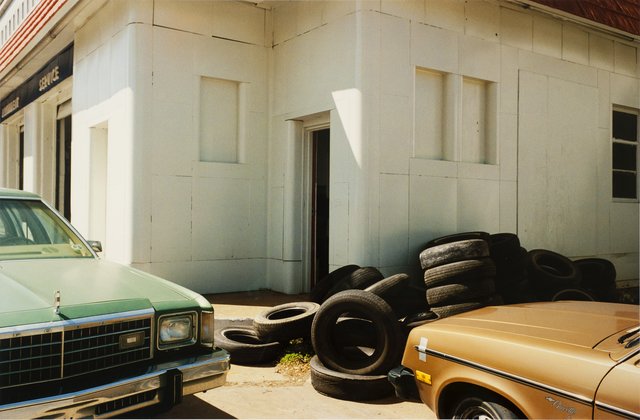
Each of us lives in a small world of familiar buildings, cars, and people, making places like Warsaw, Venice, or Los Angeles seem mundane. However, photographers like William Eggleston, Stephen Shore, and Joel Meyerowitz have shown that hidden beauty lies in everyday scenes. Discover this with me and my mini-course, “THE Walk”.
Rules, rules, rules…
We all know rules exist for safety and relationships, but in art, they can be broken or created anew. Photography, initially governed by rules like the rule of thirds, perspective and others offers more. Phillippe Halsman, a renowned 20th-century photographer, created inspiring rules to explore deeper truths in portraits, pushing beyond traditional boundaries.